
PORTFOLIO
UI/UX Design
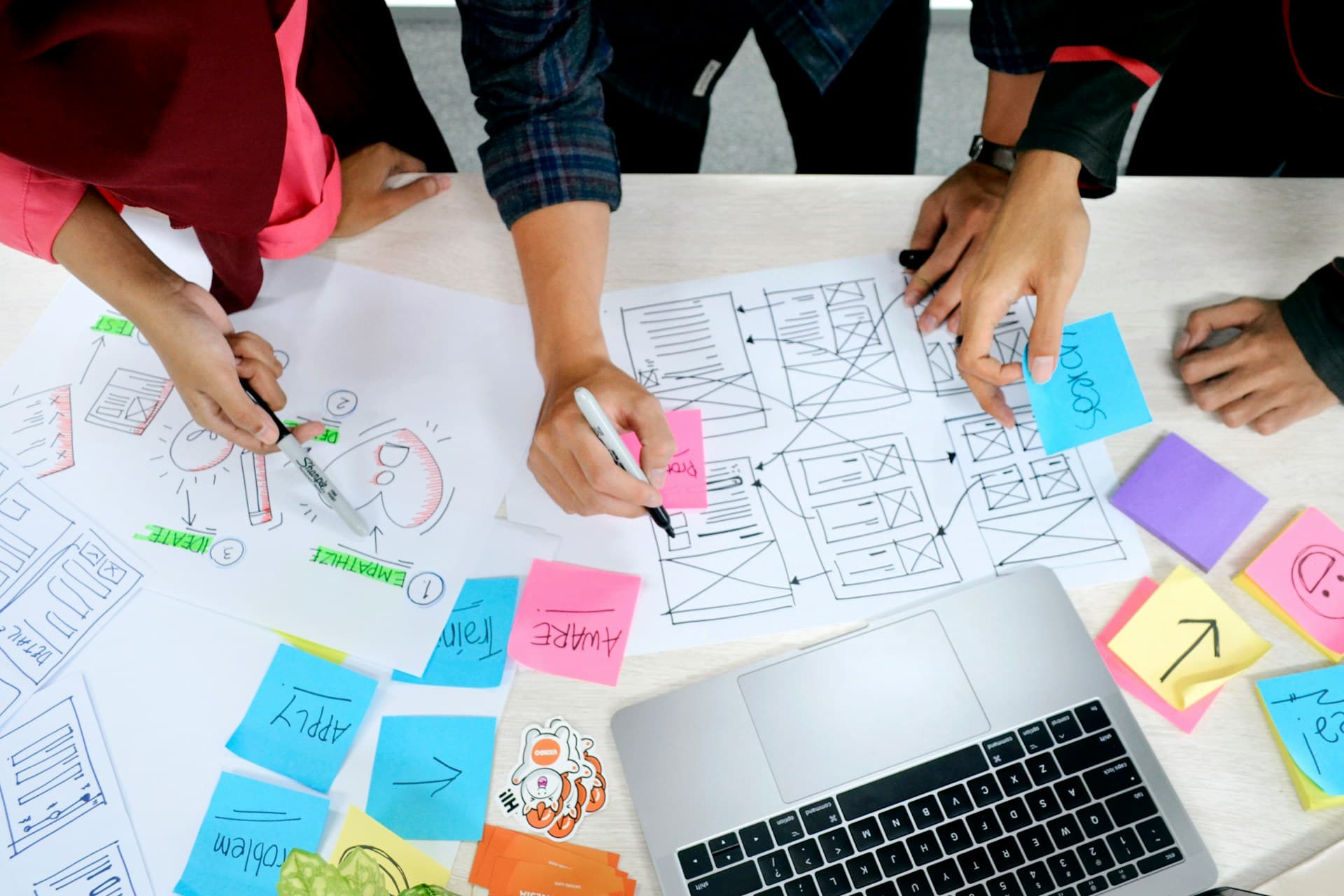
UI/UX Design Illustrations (Sumber: https://unsplash.com/id/foto/orang-yang-menulis-di-kertas-putih-qC2n6RQU4Vw)
The goal of this project is to design a mobile app that makes it easier for users to access various health services, both online and offline. I developed this project as my final project for the Mobile App Design course I took at university.
This project was initiated due to increased public awareness of health issues following the COVID-19 pandemic some time ago, which has led to public demand for improved access to healthcare services. This can also be seen as an opportunity for stakeholders in the information technology sector to compete in introducing new innovations, particularly in the healthcare field.
The goal of this project is to develop an application that makes it easier for users to access various healthcare services—both online (such as teleconsultations) and offline (such as home care services)—through their own cell phones.
The key features offered by this mobile app include the following:
Creating an app that makes it easier for users to access healthcare services anywhere and anytime.
Consulting with a doctor via live chat or video call.
Schedule an appointment with a doctor for an in-person consultation
Purchase prescription and over-the-counter medications
Schedule an appointment for in-person or at-home laboratory testing
Schedule a physical therapy appointment, either at home or in-person
Find the healthcare facility closest to home
The implementation begins with a comparative analysis of several existing mobile health applications, examining the similarities and differences in their features. The gaps identified through this comparison will be addressed in the design of the new mobile application.
Following this, user personas are developed to represent the ideal types of users for the application. These personas outline the users' daily habits, the challenges they encounter, and the goals they aim to achieve by using the application. Given the project's time constraints, "proto-personas"—fictional personas based on internal assumptions and hypotheses—are utilized.
Based on the comparative analysis and the development of these proto-personas, the core problems and potential solutions are defined. These solutions are then prioritized to establish a roadmap for developing a Minimum Viable Product (MVP).
The design process continues with the creation of a site map to outline the page structure and hierarchy, as well as user flows to map out the user's journey within the application. These serve as a reference for developing initial sketches (rough drafts on paper), wireframes (black-and-white digital structural layouts), and the final visual design. As a concluding step, a prototype is created—an interactive model that allows for the testing of the application's workflows.
The result of this project is a mobile app design called “AyoSehat!”. This app addresses the needs identified during the analysis process. The design was created using Figma and includes a prototype that allows users to test the interaction flow before it is further developed into a fully functional mobile app.
Figma: Click Here
Technology
Share This Article?