
PORTFOLIO
Internet Of Things
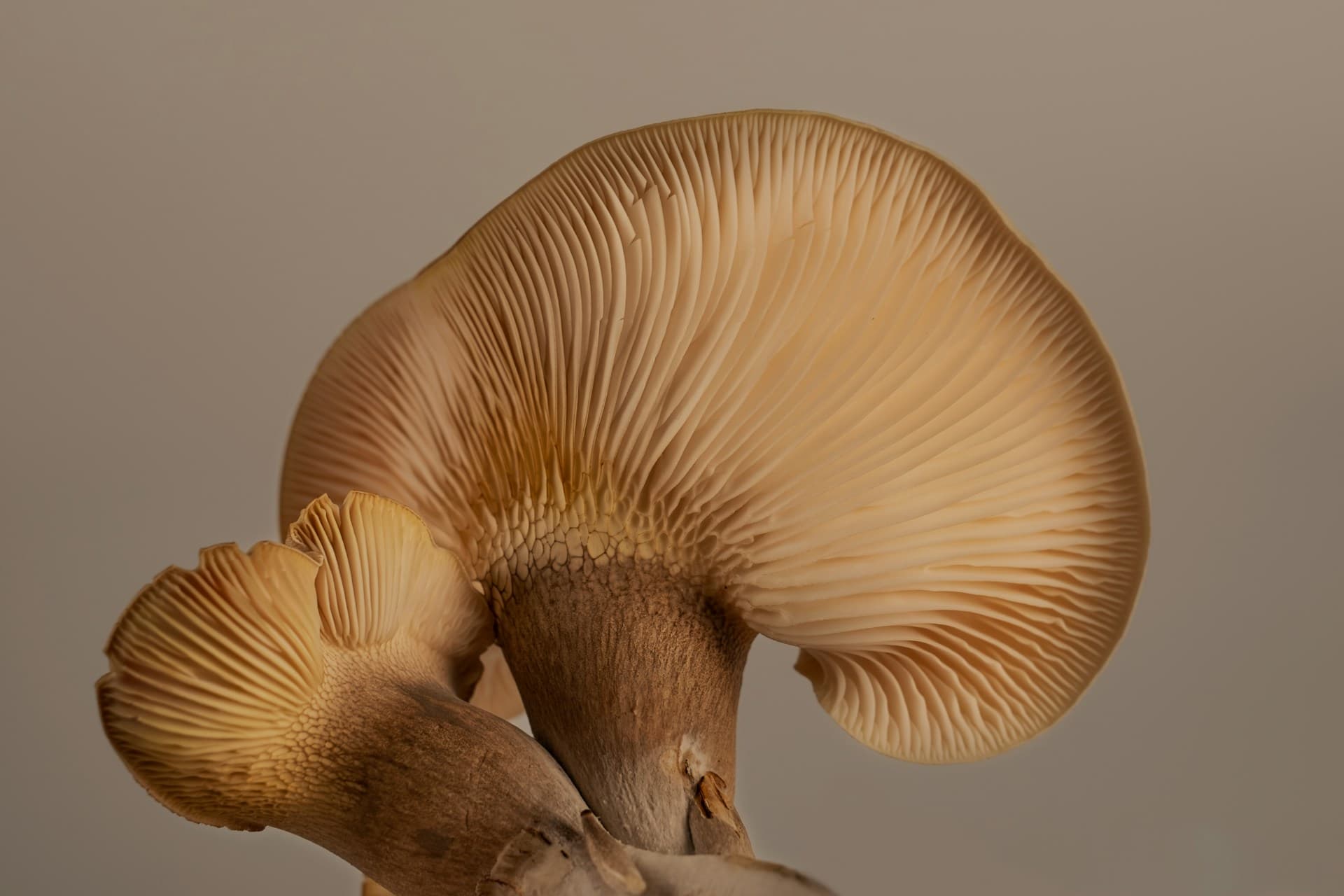
Oyster Mushroom (Source: https://unsplash.com/id/foto/jamur-putih-dan-coklat-dalam-fotografi-close-up-WovqihPZOZw)
This project aims to develop an Artificial Intelligence of Things (AIoT)-based system that can be used in the oyster mushroom cultivation process. Oyster mushrooms require specific temperatures and humidity levels to grow properly, so it is important to maintain stable growing conditions. This is especially true when cultivation takes place in urban areas, where conditions are not as favorable as in rural areas for oyster mushroom cultivation. This project was developed as my undergraduate thesis for my university degree.
The concept of urban agriculture is currently gaining popularity among the public. One of the crops widely cultivated in urban areas is the oyster mushroom, due to its relatively low initial costs and ease of cultivation. However, the challenge is that oyster mushrooms can only grow optimally at temperatures of 24–27 °C and humidity levels of 80–90%. The generally hot weather in cities like Jakarta poses a unique challenge for farmers cultivating them, making it necessary to have a system that can control and maintain temperature and humidity at optimal levels so that oyster mushrooms can grow to their full potential.
The objective of this project is to develop an IoT- and AI-based system that can be used to control temperature and humidity in oyster mushroom cultivation. IoT plays a role in collecting temperature and humidity data and regulating these parameters following an inference process performed by AI using fuzzy logic—a logical framework that assumes a value is not necessarily 100% true or false but can lie somewhere in between. It is hoped that by utilizing these two technological concepts, the temperature and humidity in oyster mushroom cultivation can not only be controlled but also maintained at ideal conditions, thereby optimizing growth and ultimately yielding a better harvest.
The main features of this system are as follows:
The system can read input from temperature and humidity sensors.
The system can perform inference using fuzzy logic to make decisions in the temperature and humidity control process.
The system can control temperature and humidity using specified actuators.
The system can store temperature and humidity data before and after control in a database that can be accessed through the provided mobile app.
This system was developed using the PPDIOO (Prepare, Plan, Design, Implementation, Optimize, and Optimization) method, a development methodology formulated by Cisco that is commonly used in the development of IoT-based systems.
During the Prepare phase, data was collected through literature reviews, observations, and interviews with oyster mushroom farmers. The collected data was then analyzed. This analysis then served as input for the Plan phase, which aimed to determine the requirements necessary for developing this system. These requirements, in turn, served as input for the Design phase, which aimed to design the system as a solution to the temperature and humidity issues in oyster mushroom cultivation. The resulting design itself encompasses electronic components, system flow, a database, fuzzy logic, and a mobile application that will be developed alongside this system. This article will not discuss these designs in detail; however, the block diagram of the system resulting from this design phase can be seen in the figure below.
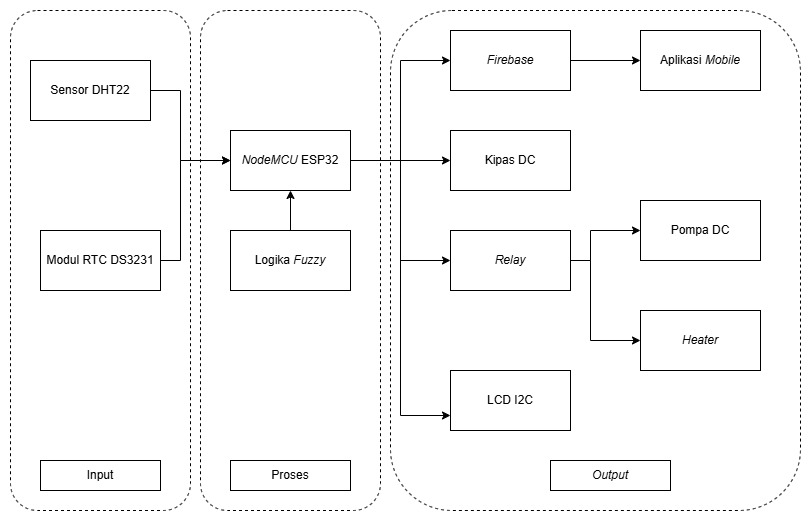
Once the design phase is complete, the next step is implementation. Implementation itself involves programming the ESP32 microcontroller—which serves as the “brain” of the entire system—and configuring Firebase to store data from the ESP32 and forward it to the mobile app developed with Flutter. The mobile app can also receive notifications from Firebase when control processes are initiated, utilizing Firebase Cloud Functions and Firebase Cloud Messaging, which enable this functionality.
The next step is testing during the “operate” phase. In this phase, a series of tests are conducted, ranging from sensor accuracy to testing the system’s effectiveness in promoting oyster mushroom growth. The results of these tests serve as input for the “optimize” phase—the final stage of the entire system development process—where any identified shortcomings are documented before being used as “notes” for development in subsequent phases.
Based on the development work that has been carried out, a system has been successfully created to monitor and control temperature and humidity in oyster mushroom cultivation using IoT and AI (Fuzzy Logic). The system itself is shown in the figure below.
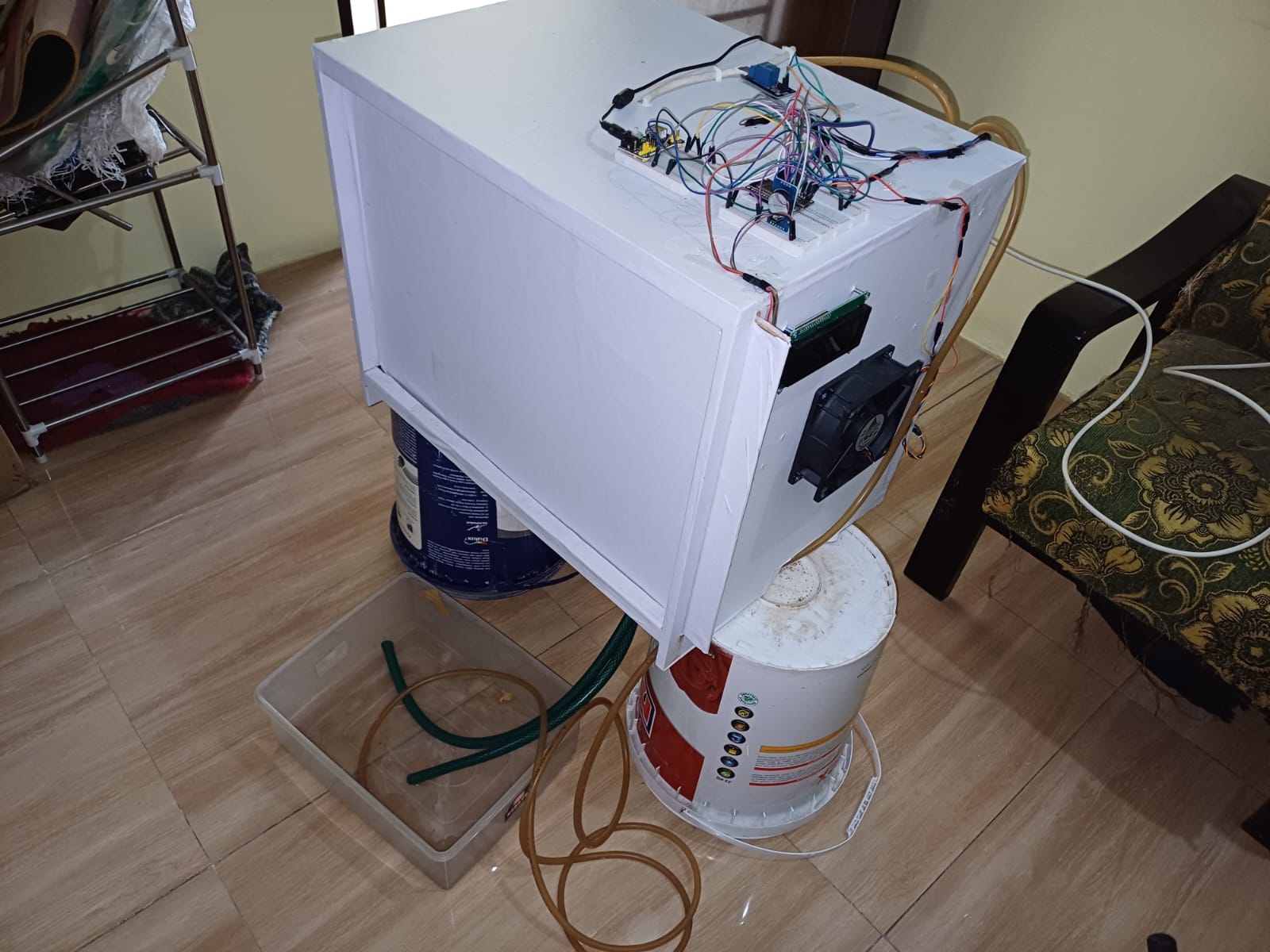
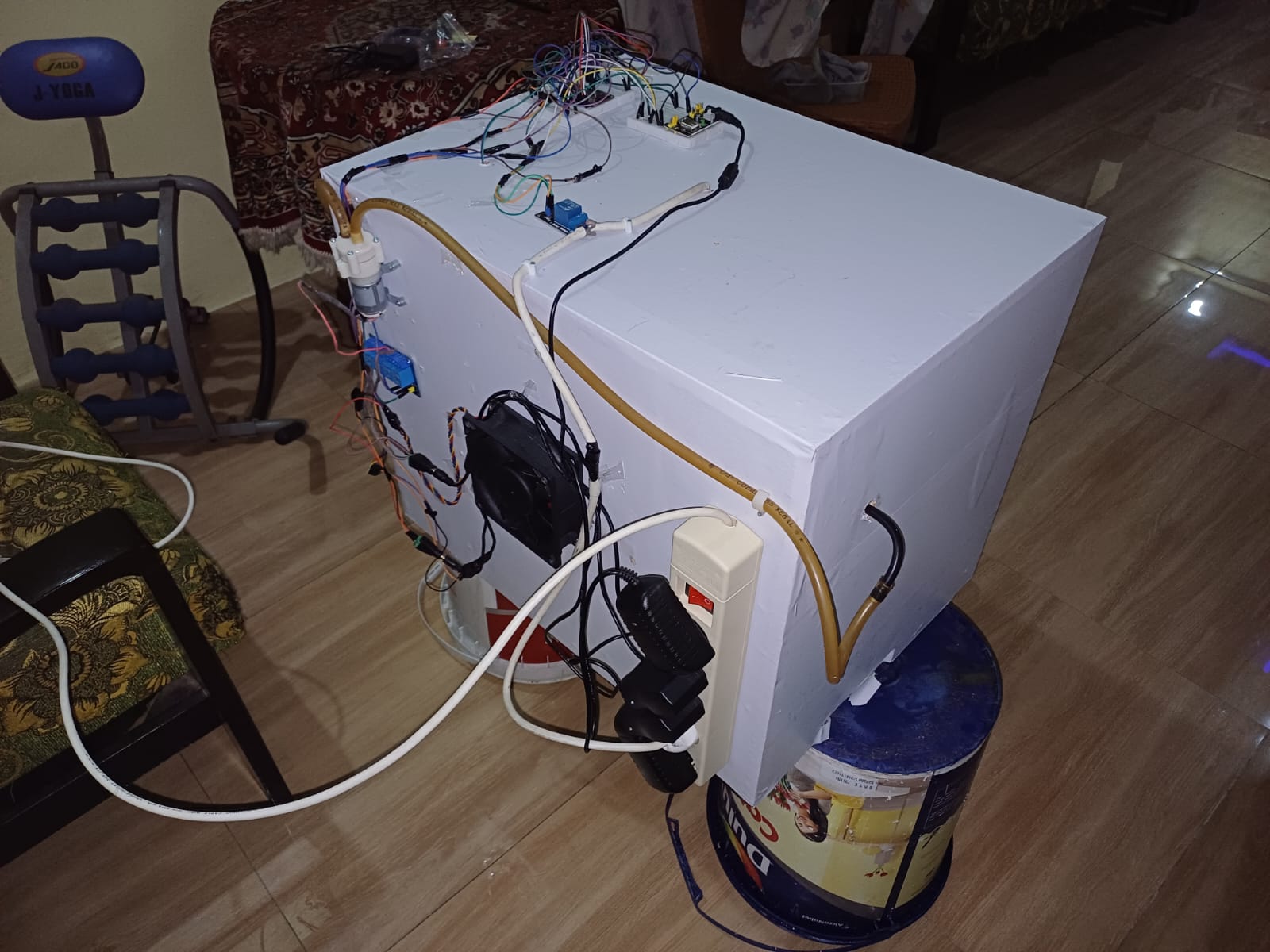
The system has successfully maintained a stable temperature averaging 25.96 °C and an average humidity of 87.18%. In addition, oyster mushrooms can grow and be harvested under optimal conditions compared to oyster mushrooms grown conventionally without the assistance of this system. For more details, you can read the full journal article and thesis via the links provided in the “Related Links” section. If those links are inaccessible, you can contact me through the contact page. I will respond as soon as possible.
Academic Journal: Click Here
Undergraduate Thesis: Click Here
GitHub (Repository for ESP32 Code): Click Here
GitHub (Repository for Firebase Cloud Function Code): Click Here
GitHub (Repository for Mobile Apps Code): https://github.com/irsannh/kumbung-pintar-android-app
Technology
Share This Article?